

_edited.png)
Why The Cat You Came Home With is Not the Same Cat You Saw at the Shelter
It’s one of the most common things people share about their cat's behavior is,
“The cat I brought home isn’t the same cat I met at the shelter.”
So let me say this first:
This change is not only normal — it’s expected. The truth is this: The cat you meet at the shelter may not be the cat you meet at home. You are meeting a cat in the middle of their hardest chapter.
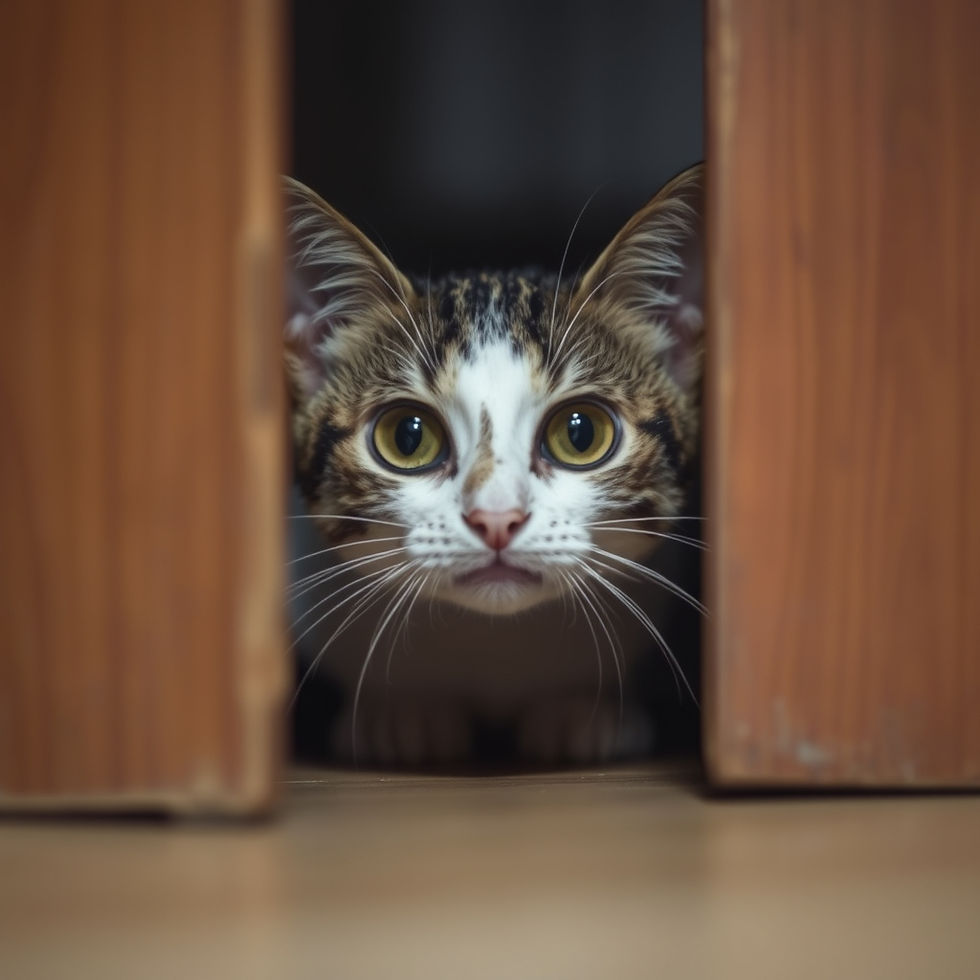
Cats change dramatically based on their environment, and even the best-run shelters are still stressful places to be. Cats are coming and going constantly. Some arrive sick, pregnant, unfixed, or injured. There are unfamiliar sounds, smells, and faces at all hours. One person feeds. Another medicates. Another cleans. Another introduces potential adopters.
For some cats, that environment is manageable. For others, it is overwhelming.
So when you met your cat at the shelter, you weren’t seeing their full personality. You were seeing how they coped under pressure. Some cats cope by becoming quiet and withdrawn. Some become defensive. Some shut down entirely. Others do the opposite — they become overly social, clingy, or hyper-aroused.
None of these behaviors are “who they are”. They are survival strategies.
Many shelter cats are also healing.
Some have lived outdoors for years. Some were surrendered suddenly. Some were abandoned without warning. Some are young mothers who never had a chance to be kittens themselves.
Cats don’t “reset” emotionally the moment they leave those experiences behind. Healing takes time.
This is why a cat who was shy, fearful, or even reactive in the shelter may blossom in a home. And why a cat who seemed confident and outgoing may initially shut down once they arrive.
Your home is quieter. Your routine is predictable. Your presence is consistent.
And consistency is what allows a cat’s true personality to surface.
I’ve seen it countless times.
Shy cats grow affectionate. Bold cats become cautious before finding their footing. Cats who ignored others in the shelter form deep bonds at home. Cats who thrived socially there need space and decompression here.
This doesn’t mean you chose the “wrong” cat, It means your cat finally has room to become themselves.
It’s also important to remember that the playful kitten you brought home will one day be an adult — and eventually a senior. Personalities evolve. Needs change. Energy shifts. What matters most is not who your cat was on day one, but who they are becoming in the safety of your home.
So if your newly adopted cat feels different than you expected, I encourage you to pause — and reframe what you’re seeing.
This isn’t regression. This isn’t failure. This is transition.
With time, patience, and trust, many cats reveal depths of affection, resilience, and individuality that simply could not exist in a shelter environment.
Some of the most extraordinary cats I’ve known were the ones who didn’t “shine” at first.
They weren’t broken. They were healing.
And sometimes, the greatest gift we give a cat is not expecting them to be who they were — but allowing them to become who they were always meant to be.


